Permanent Installation
Davits are designed to support temporary or permanently suspended access equipment. These rigging devices can be designed to a variety of sizes depending on parapet wall heights, jobsite conditions and access needs. Top rotating davits allow for roof-launched platforms while bottom rotating allow for ground-rigged platforms to reduce the overall davit height. We offer all of the following davits and accessories:
- Bottom RotatingDavits
- Top RotatingDavits
- Pedestals
- Pedestal Adapters
- Sockets
- Rolling Carriages
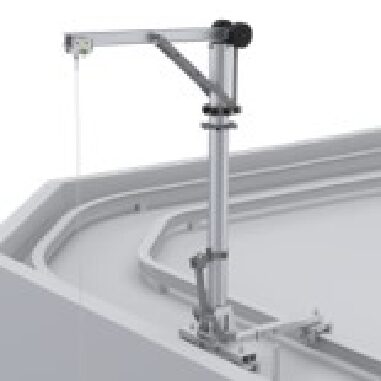
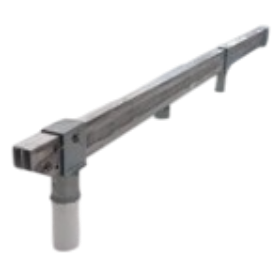
Outriggers are an alternative option for supporting suspended access equipment. Transportable outrigger beams can be epositioned where needed on a building and secured to permanent stands or anchors.
Back-fed outriggers allow the suspension wire rope(s) to be secured to the rear portion of the beam and fed through the beam to the ground. Push-thru our triggers slide through stands in the wall providing access to a building’s façade. We offer all of the following types of outriggers and rigging sleeves:
- Transportable Tie-Down Outrigger/Beam
- Push-Thru Outrigger/Beam
- Fixed Outrigger/Beam
- Back-fed Outrigger/Beam
- Back-fed Outrigger/Beam
- Rigging Sleeve “Pigeon Hole”
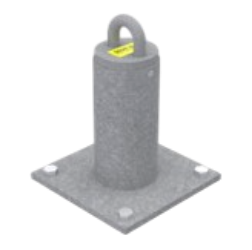
Designed to provide a secure tie-off for personal fall protection equipment or as an anchorage for tying back rigging equipment for suspended scaffold. These anchors can be temporarily or permanently installed and are securely attached to the structure allowing the load to be transferred directly into the building/structure. Anchors can be bolted into concrete, flange bolted to the structure or embedded into the concrete when poured during construction. (Anchors can be fabricated to meet California code(s)). We offer all of the following anchors:
- Roof Anchors
- Wall Anchors
- Flush Anchors
Installation & Repair
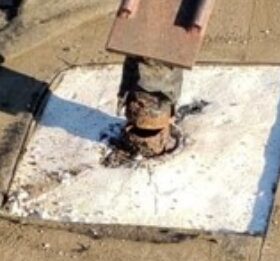
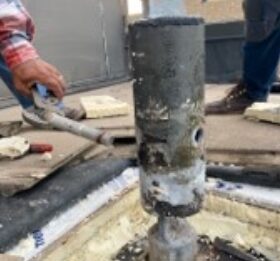
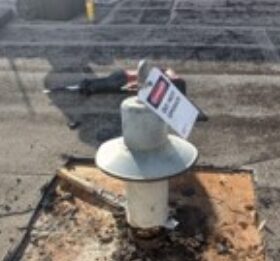
- Davit / Anchors Installation
- Davit / Anchors repair
- OSHA 1910.27(B)(1)(I) Inspection
- OSHA 1910.27(B)(1)(I) Engineer Certification

OSHA 1910.27(b)(1)(i)
Before any rope descent system is used, the building owner must inform the employer, in writing that the building owner has identified, tested, certified, and maintained each anchorage so it is capable of supporting at least 5,000 pounds (268 kg), in any direction, for each employee attached. The information must be based on an annual inspection by a qualified person and certification of each anchorage by a qualified person, as necessary, and at least every 10 years.
OSHA 1910.27(b)(1)(ii)
The employer must ensure that no employee uses any anchorage before the employer has obtained written information from the building owner that each anchorage meets the requirements of paragraph (b)(1)(i) of this section. The employer must keep the information for the duration of the job.
OSHA 1910.27(b)(1)(iii)
The requirements in paragraphs (b)(1)(i) and (ii) of this section must be implemented no later than November 20, 2017.
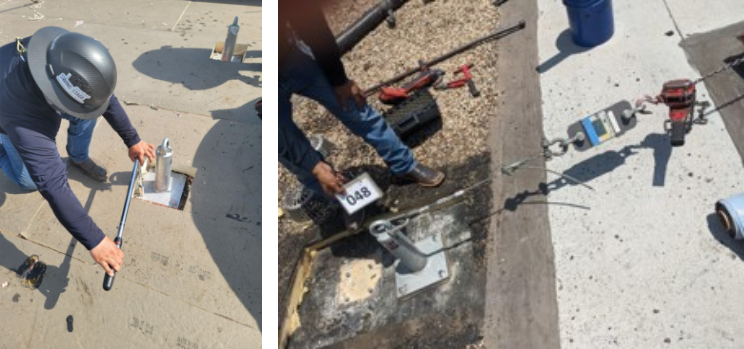
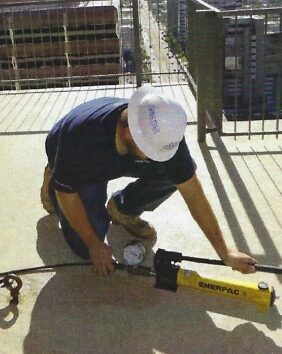
ANCHOR LATERAL PULL TEST (ALPT)
The standard anchor lateral pull test shall be performed an all anchors. Any anchor that does not facilitate testing by the ALPT method shall be tested / inspected by other means approved by the engineer of record (EOR). The anchor tester shall immediately notify the EOR of any anchor that does not facilitate the use of the proper ALPT procedure.


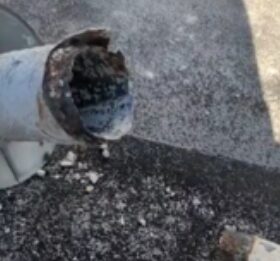
With a visual inspection, do you know what your anchors look like on the inside?